M42’s IROS and Mammoth Biosciences to conduct UAE’s first trial of an LNP-delivered gene-editing therapy
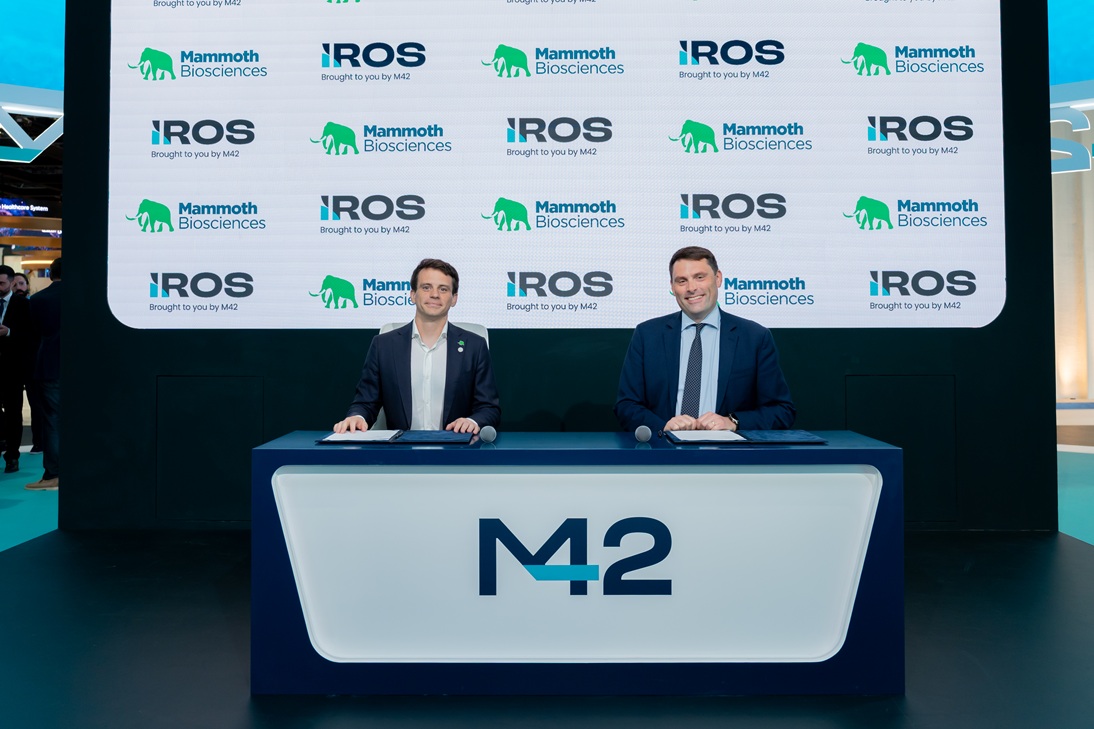
IROS, M42’s contract research organization, and Mammoth Biosciences today announced they will conduct the UAE’s first clinical trial of a lipid nanoparticle (LNP)-delivered gene-editing therapy. Supported by the Department of Health – Abu Dhabi (DoH), the trial will evaluate MB-111, an investigational treatment designed to achieve sustained reductions in severely elevated blood triglycerides following a single intravenous infusion. The announcement was made during Abu Dhabi Future Health Summit (ADFHS) 2026.
Developed by Mammoth, co-founded by Nobel laureate and CRISPR pioneer Jennifer Doudna, MB-111 will be evaluated in adults with persistent chylomicronemia. The condition leaves patients with extremely high levels of triglycerides, a type of fat in the blood, and can cause recurrent, potentially life-threatening inflammation of the pancreas. It includes inherited conditions such as familial chylomicronemia syndrome, in which genetic changes impair the body’s ability to clear triglyceride-rich particles, as well as forms arising from a combination of genetic and other factors.
A US study published in the Journal of Clinical Lipidology estimated that persistent chylomicronemia affects approximately one in 5,500 US adults. In the study’s clinical dataset, around one in four patients with the condition had a diagnosis of acute pancreatitis. These estimates relate to the US population and do not establish prevalence in the UAE. For people whose triglycerides remain severely elevated despite conventional treatment, managing the condition can involve restrictive diets, ongoing medication and repeated hospital admissions.
MB-111 uses lipid nanoparticles—tiny fat-based particles—to deliver Mammoth’s ultracompact CRISPR gene-editing system, CasPhi, into liver cells. The treatment is designed to switch off the APOC3 gene in those cells, reducing production of a protein involved in regulating triglyceride levels. By targeting this pathway, MB-111 aims to achieve a lasting effect through gene editing directly inside the body.
The collaboration reflects Abu Dhabi’s capabilities in population genomics and earlier identification of inherited conditions with the development of genetic medicines. Building on the foundation established through the Emirati Genome Program, the emirate is developing the clinical research capabilities needed to turn advances in genomic science into new possibilities for treatment.
H.E. Dr. Noura Khamis Al Ghaithi, Undersecretary of the Department of Health – Abu Dhabi, said: “Abu Dhabi brings together population-scale genomic knowledge, advanced healthcare infrastructure and clinical research expertise to support the development and evaluation of genetic medicines. The Emirati Genome Programme has strengthened our understanding of genetic variation in our population. Our ambition is to build on that knowledge by enabling rigorous research into potential treatments. This collaboration brings Mammoth’s gene-editing expertise together with IROS’s research capabilities, supported by DoH’s regulatory oversight. It is a practical step towards developing local expertise in genetic medicine and contributing evidence that can inform future care in the UAE and beyond.”
Dr. Trevor Martin, Co-founder and Chief Executive Officer of Mammoth Biosciences, said: “Advancing MB-111 into clinical evaluation is an important milestone in our ambition to turn ultracompact CRISPR technology into potentially lasting treatments. Abu Dhabi has made a clear commitment to the future of genetic medicine, and this collaboration gives us a strong partner in pursuing that ambition. With the support of DoH and the clinical research capabilities of IROS, we can generate critical evidence for MB-111 while establishing a foundation for a longer-term scientific partnership. We see an opportunity to help shape the next chapter of genetic medicine together.”
Dr. Fahed Almarzooqi, Chief Executive Officer of M42’s Integrated Health Solutions, said: “Through IROS, M42 is establishing the clinical research capabilities that will help position the UAE at the forefront of advanced medicine development. This collaboration brings next-generation gene-editing science into our research ecosystem and strengthens IROS’s role as a partner for biotechnology companies developing complex therapies. Our ambition extends beyond individual trials: we are building a centre of expertise that can advance successive generations of genetic medicines and make Abu Dhabi a destination for their clinical development.”
The trial builds on an agreement signed by DoH, M42 and Mammoth Biosciences in June 2026 to advance gene-editing therapies and strengthen Abu Dhabi’s clinical research and advanced therapy capabilities. It brings that collaboration into clinical evaluation, combining the development of evidence for MB-111 with a broader commitment to establishing enduring expertise in genetic medicine in the UAE.
Abu Dhabi Future Health Summit (ADFHS) is the annual flagship gathering of Future Health – A Global Initiative by Abu Dhabi, a year-round platform for global collaboration curated and convened by the Department of Health – Abu Dhabi (DoH). Under the theme ‘To Sense Is to Predict’, ADFHS 2026 brings global experts and partners together to explore how earlier insight can support informed decisions, timely intervention and care better suited to people’s needs.
